How AI Chatbots Can Help Your Small Business Get More Customers
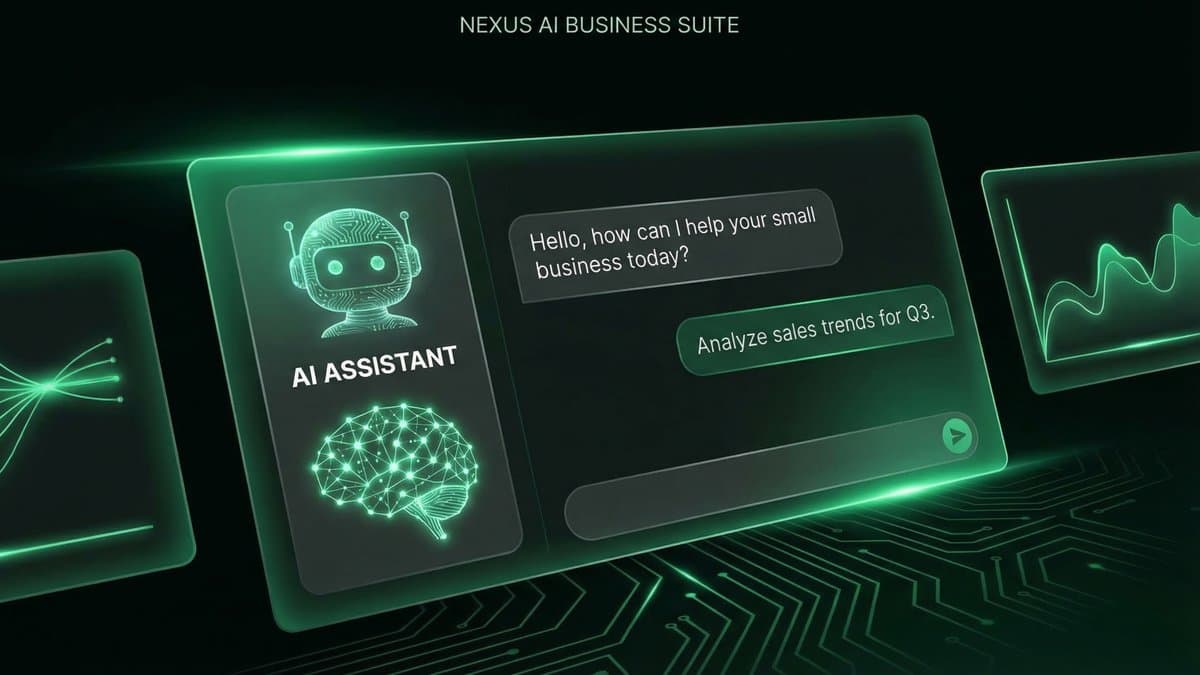
If you run a small business, you've probably heard the buzz around AI chatbots. Maybe a competitor has one on their website, or you've seen ads promising they'll "transform your business overnight." But what does that actually mean for someone running a plumbing company in Dublin, a hair salon in Cork, or a B&B in the Lake District?
In this guide, I'll cut through the jargon and explain exactly what AI chatbots are, how they work, what they cost, and (most importantly) whether one could genuinely help your business. No hype, no hard sell. Just practical information so you can make a smart decision.
What Is an AI Chatbot and How Does It Work for Small Businesses?
An AI chatbot is a small piece of software that sits on your website and has conversations with your visitors, answering their questions, pointing them in the right direction, and collecting their contact details so you can follow up.
This isn't ChatGPT or some generic robot. A good business chatbot is trained specifically on your business information: your services, your prices, your opening hours, your location, your frequently asked questions. It knows what you do because someone has fed it all the details about your business.
Here's how a typical interaction might look:
- A potential customer lands on your website at 9pm on a Tuesday
- A friendly chat bubble appears: "Hi! I'm here to help. What can I help you with today?"
- They type: "Do you do emergency callouts?"
- The chatbot replies with your actual answer: your callout policy, areas you cover, and how to get in touch
- It captures their name, phone number, and a brief description of the problem
- You wake up the next morning with a qualified lead sitting in your inbox
The visitor gets an instant answer. You get a lead you would have otherwise lost. That's the core value.
5 Ways an AI Chatbot Can Help Your Business
1. Answer Customer Questions 24/7
Most small business websites are essentially digital brochures. Someone visits, reads a bit, and if they have a question that isn't answered on the page, they leave. Maybe they'll ring you tomorrow. More likely, they'll just Google the next business on the list.
A chatbot changes that. It's there at midnight on a Saturday, on bank holidays, while you're on a job, whenever someone has a question. It doesn't need breaks, doesn't call in sick, and responds instantly every time.
For service businesses especially, this matters. A lot of your potential customers are searching for help outside normal working hours. If your website can answer their question and capture their details at 11pm, that's business you'd otherwise miss.
2. Capture Leads While You Sleep
This is probably the biggest practical benefit. A chatbot doesn't just answer questions; it naturally collects contact information during the conversation. When someone asks about availability or pricing, the chatbot can say something like: "I'd be happy to help with that. Can I grab your name and number so Mateusz can get back to you with a quote?"
It feels natural and helpful, not pushy. And every morning, you have a list of people who were interested enough to leave their details. Compare that to a static contact form that most visitors never bother filling out.
3. Reduce Repetitive Enquiries
If you find yourself answering the same five questions over and over ("What areas do you cover?", "How much do you charge?", "Do you offer free quotes?", "What are your opening hours?", "Do you take card payments?"), a chatbot can handle all of that automatically.
That frees up your time (or your receptionist's time) to deal with the enquiries that actually need a human touch. You're not replacing the personal service; you're removing the repetitive stuff so you can focus on the work that matters.
4. Guide Visitors to the Right Service
Many small businesses offer several services, and visitors don't always know which one they need. A plumber might do boiler servicing, emergency repairs, bathroom installations, and general plumbing. A web visitor might not be sure which category their problem falls into.
A chatbot can ask a couple of simple questions ("Is this an emergency or can it wait?", "Is this for a residential or commercial property?") and point them to the right service page or the right contact method. It's like having a helpful receptionist who directs people to the right place.
5. Build Trust and Professionalism
This one's a bit less obvious, but it matters. When a potential customer visits your website and sees a responsive, helpful chatbot that knows about your business, it signals that you're professional and established. It's the digital equivalent of having someone answer the phone on the first ring.
For small businesses competing against larger companies, this kind of polish can make a real difference in how potential customers perceive you.
What Kinds of Businesses Benefit Most?
AI chatbots aren't for everyone, and I'd rather be honest about that. They tend to work best for businesses that tick a few of these boxes:
-
You get a lot of the same questions. Tradespeople, salons, clinics, restaurants, B&Bs: if customers regularly ask about availability, pricing, areas covered, or booking processes, a chatbot handles that brilliantly.
-
You miss enquiries outside business hours. If you're a one-person operation or a small team, you can't always answer the phone. A chatbot catches those out-of-hours visitors.
-
Your service needs a bit of explanation. If customers often need guidance on which service is right for them, a chatbot can walk them through it.
-
You rely on your website for leads. If your website is a key part of how customers find you, a chatbot can significantly improve conversion from "visitor" to "enquiry."
Some specific examples I see working well in Ireland and the UK:
- Tradespeople (plumbers, electricians, builders): answering "do you cover my area?" and capturing emergency callout details
- Hair and beauty salons: handling booking questions, service descriptions, and price enquiries
- Dental and physiotherapy clinics: answering insurance questions, explaining treatments, and directing to booking
- Restaurants and cafes: fielding questions about menus, dietary requirements, and group bookings
- B&Bs and guesthouses: handling availability checks, local area questions, and check-in details
- Driving instructors: explaining lesson packages, areas covered, and availability
If your business is purely in-person with no website presence, or if every customer interaction is completely unique and complex, a chatbot probably isn't the right fit. And I'll always tell you that upfront.
What Does an AI Chatbot Actually Look Like on a Website?
If you've never interacted with one, here's what to expect. It's much simpler than you might think.
On most websites, the chatbot appears as a small icon or bubble in the bottom-right corner of the screen. It's unobtrusive; it doesn't block the page or force anyone to interact with it.
When a visitor clicks (or sometimes after a short delay), a chat window opens. There's usually a friendly greeting message, something like: "Hi there! I'm here to help you find what you need. Ask me anything about our services."
From there, it works like any messaging app: WhatsApp, Facebook Messenger, or text messages. The visitor types a question, and the chatbot responds in plain English. Some chatbots also offer quick-reply buttons like "See our services", "Get a quote", or "Opening hours" to make it even easier.
The whole thing feels familiar and approachable. There's no software to download, no account to create. It's just a conversation.
Behind the scenes, the chatbot is matching what the visitor types against the information it's been trained on. When it recognises a question about pricing, it pulls up the pricing info. When it spots someone asking about contact details, it offers to collect their information. It's smart, but it's not magic; it works because someone has taken the time to teach it about your business.
Common Concerns About AI Chatbots
I hear the same worries from nearly every business owner I talk to about chatbots. They're all reasonable concerns, so let me address them directly.
"What if it gives wrong answers?"
This is the number one concern, and it's a fair one. Here's the reality: a well-built chatbot that's trained on accurate information about your business will give accurate answers the vast majority of the time. It's not making things up; it's drawing from the information it's been given.
That said, no chatbot is perfect. For questions it's not confident about, a good chatbot is designed to say something like: "I'm not 100% sure about that. Let me get Mateusz to get back to you directly." It collects their details and escalates to you. That's much better than a visitor leaving with no answer at all.
The key is in the setup. The more thorough the training, the more accurate the responses. And I always test extensively before anything goes live.
"Is it expensive?"
Chatbot costs vary a lot depending on the complexity. A basic chatbot that handles FAQs and captures leads can be surprisingly affordable; we're not talking enterprise software prices here.
For most small businesses, the cost is comparable to a few hours of someone's wages per month. When you consider that it's working 24/7 and potentially capturing leads you'd otherwise lose, the return on investment can be genuinely strong.
I always discuss costs upfront and transparently. There's no point in building something that costs more than the value it brings.
"Will it replace my staff?"
No. A chatbot handles the routine, repetitive stuff: the questions that don't need a human. Your staff can then focus on the interactions that actually benefit from a personal touch: complex enquiries, relationship building, closing sales.
Think of it as a filter. The chatbot handles the first layer, and humans handle everything that needs real judgement or empathy. Most businesses find their staff actually prefer it because they're not constantly interrupted by the same basic questions.
"Is it hard to set up?"
Not from your end. When I build a chatbot for a business, all you need to do is answer some questions about your services, share your FAQs, and review the chatbot before it goes live. I handle all the technical work: the building, the training, the integration with your website, and the testing.
Once it's running, you don't need any technical knowledge to use it. You'll get leads via email or a simple dashboard, and if anything needs updating (new services, changed prices), I make those changes for you.
How I Build AI Chatbots for Small Businesses
If you're curious about the actual process, here's how it works when I build a chatbot for a client:
1. Understanding your business. I start by learning about what you do, who your customers are, and what questions they typically ask. This usually takes one conversation, a phone call or video chat. I'll also look at your website, your Google reviews, and any marketing material you have to get a full picture.
2. Training the chatbot. Using the information from step one, I build out the chatbot's knowledge base. This includes your services, pricing, areas covered, opening hours, booking process: everything a potential customer might ask about. I write the responses in a natural, friendly tone that matches your brand.
3. Designing the conversation flow. A good chatbot doesn't just answer questions; it guides conversations towards useful outcomes. I design flows that naturally lead to lead capture, booking, or connecting with you directly. The goal is always to be helpful, not pushy.
4. Integration and testing. I integrate the chatbot into your website and test it thoroughly. I'll try to break it, ask it trick questions, and make sure it handles edge cases gracefully. I also set up the lead notification system so you receive enquiries promptly.
5. Refinement. After launch, I monitor how the chatbot performs and make adjustments. Real visitors will ask questions you didn't anticipate, and I use those conversations to improve the chatbot over time. This ongoing refinement is what separates a useful chatbot from a novelty.
This is a service I offer as part of what I do at nefling.dev. It sits alongside the website design and development work, because a chatbot works best when it's built by someone who understands your website, your brand, and your customers as a whole.
Frequently Asked Questions
How much does an AI chatbot cost for a small business?
Can the chatbot handle bookings or appointments?
What happens if the chatbot can't answer a question?
Do I need any technical knowledge to use it?
How long does it take to set up an AI chatbot?
Want to See If a Chatbot Could Work for Your Business?
If any of this sounds like it could be useful for your business, I'm happy to have a no-pressure chat about it. I'll ask a few questions about your business, your website, and the kinds of enquiries you get, and I'll give you an honest opinion on whether a chatbot would actually be worth the investment.
No hard sell. If it's not a good fit, I'll tell you. And if it is, I'll explain exactly what it would involve and what it would cost.
Get in touch here. Just mention you're interested in chatbots, and I'll take it from there.
Related Articles
What Does It Cost to Run a Website in Ireland? Monthly and Annual Fees Explained (2026)
Hosting, maintenance, SSL, domain renewal, and support retainers: here's the full ongoing cost of running a business website in Ireland, with real Irish market prices for 2026.
How to Choose a Web Developer in Ireland: The Complete Guide for Small Businesses (2026)
A transparent, practical guide to finding and vetting a web developer in Ireland. Covers what to look for, red flags, pricing models, questions to ask, and how to avoid costly mistakes.
SEO and GEO: How AI Search Is Changing the Game for Small Businesses in Ireland (2026)
AI search engines like Google AI Overviews, ChatGPT, and Perplexity are changing how customers find local businesses. Here's what SEO and GEO mean for small businesses in Ireland and the UK, and what you can do about it.